
Cervical
Radiculopathy .

Cervical radiculopathy occurs when a nerve in the neck becomes irritated or compressed, often from a disc herniation or arthritis. Symptoms may include pain traveling into the shoulder or arm, along with numbness, tingling, or weakness in the hand or fingers.
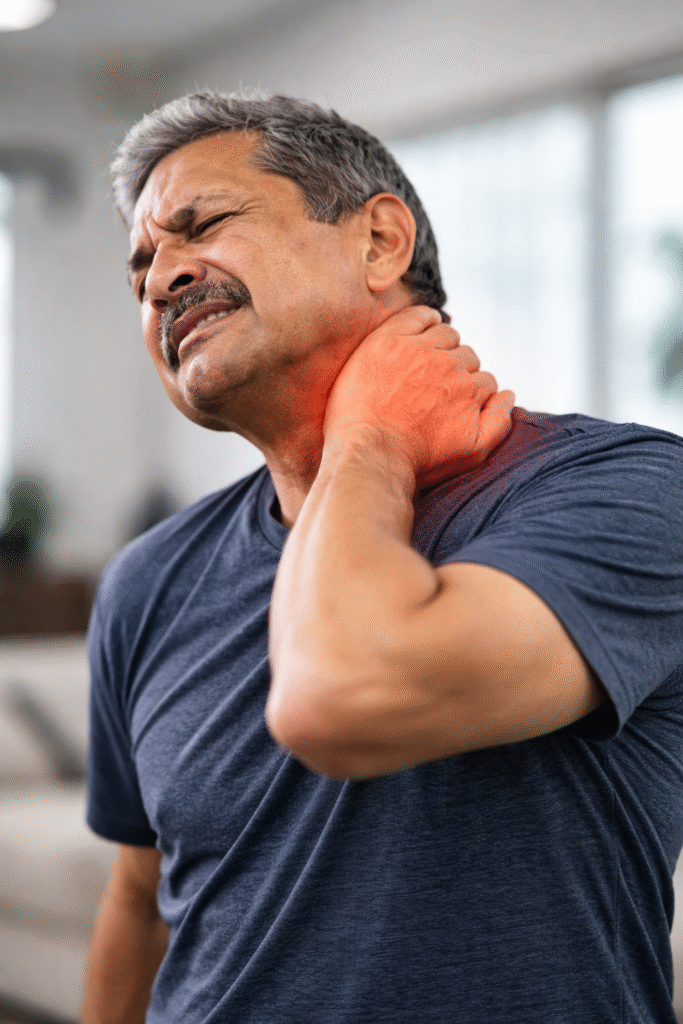
Cervical Radiculopathy
Now Accepting · New Patients

Diagnosis first. Treatment second.

Cervical (Neck) spine condition treated with conservative options first and motion-preserving surgery when needed.

4
LA offices
Region
Cervical (Neck)
★★★★★
Welcomed
Cervical Radiculopathy at a glance
  • What it is: Cervical radiculopathy occurs when a nerve in the neck becomes irritated or compressed, often from a disc herniation or arthritis. Symptoms may include pain traveling into the shoulder or arm, along with numbness, tingling, or weakness in the hand or fingers.
  • Common symptoms: Sharp or burning pain into the shoulder, arm, or hand; Numbness or tingling in the arm or fingers; Weakness in the arm, hand, or grip.
  • First-line treatment: Physical therapy — Manual therapy, neck-specific strengthening, and traction can resolve many cases.
  • When surgery is considered: progressive symptoms, neurological changes, or pain unresponsive to conservative care.
Symptoms & causes

Understanding cervical radiculopathy

Symptoms

Common symptoms

  • Sharp or burning pain into the shoulder, arm, or hand
  • Numbness or tingling in the arm or fingers
  • Weakness in the arm, hand, or grip
  • Pain worsened by certain neck positions
  • Headaches at the base of the skull
Causes

Common causes

  • Cervical disc herniation
  • Bone spurs or arthritis
  • Foraminal narrowing
  • Whiplash or other neck trauma
How Dr. Yasmeh treats it

Treatment options

Dr. Yasmeh starts with the least-invasive option that fits your case and only escalates when clearly needed.

Conservative care
Step 1

Conservative care first

Most patients improve without surgery. Dr. Yasmeh sequences therapy, medication, and targeted injections before considering operative options.

  • Physical therapy — Manual therapy, neck-specific strengthening, and traction can resolve many cases.
  • Medication — NSAIDs, oral steroids, and neuropathic-pain medication reduce inflammation and pain.
  • Cervical epidural steroid injection — Image-guided injection delivered around the irritated nerve.
Surgical care
When needed

When surgery is the right answer

When non-operative care has not worked or symptoms are progressive, Dr. Yasmeh offers motion-preserving techniques whenever clinically appropriate.

  • Minimally invasive decompression or microdiscectomy — For symptoms that do not improve with conservative care.
Common questions

About cervical radiculopathy.

  • Most patients improve with conservative care — physical therapy, medication, and targeted injections. Dr. Yasmeh only recommends surgery when symptoms are progressive, when there is neurological compromise, or when conservative care has not resolved the problem.
  • Diagnosis combines a careful history, physical exam, and imaging (typically MRI). Dr. Yasmeh reviews your imaging with you in plain language so you understand what's happening.
  • Yes — Dr. Yasmeh offers second opinions, especially for patients told they need fusion. He evaluates motion-preserving alternatives like laminoplasty or artificial disc replacement when clinically appropriate.
  • Dr. Yasmeh sees patients at four offices across Greater Los Angeles: East LA (1700 E Cesar Chavez Ave), Glendale (1505 Wilson Terrace), Santa Fe Springs (12215 Telegraph Rd), and Tarzana (18840 Ventura Blvd).
Ready when you are

Get clarity on your cervical radiculopathy today.

Same-week appointments. Four Greater LA offices. Most insurance accepted.

Call usBook online