Featured in Becker's Spine Review .
Dr. Siamak Yasmeh was featured in Becker's Spine Review discussing why laminoplasty — a motion-preserving alternative to cervical fusion — remains underused in the U.S. despite decades of strong long-term outcomes. Here are his key points, with a link to the full article.
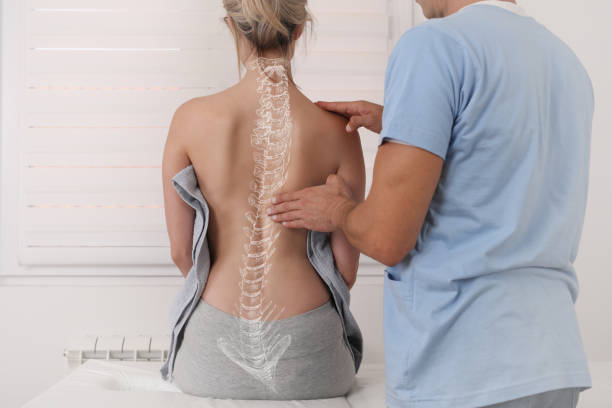
- Motion-preserving. Laminoplasty reshapes the vertebrae to create more room for the spinal cord — relieving pressure without fusing the neck and giving up motion.
- Underused in the U.S. Only about 0.4% of cervical spine cases use laminoplasty, even though it's well established in Asia and Europe with strong long-term data.
- The fusion tradeoff. After a fusion, the levels above and below tend to wear out over time — roughly 25% of patients within 10 years, 50% by 20 years, 75% by 30. Laminoplasty avoids that cascade.
- Cost-effective. 2024 research shows lower total facility costs than fusion.
- A training gap, not a results gap. Laminoplasty takes dedicated post-fellowship training and careful technique. Adoption lags because of how surgeons are trained — not because of how patients do.
"I wouldn't want a fusion if I didn't need it. I want to preserve motion."
— Dr. Siamak Yasmeh, speaking to Becker's Spine Review
A motion-preserving option more patients should hear about
For many people with multilevel cervical stenosis — narrowing of the spinal canal in the neck — the standard recommendation is fusion. Fusion works, but it permanently joins vertebrae together, and over the years the levels next to a fusion tend to take on extra stress and wear out.
Laminoplasty offers a different path. Instead of fusing the spine, it reshapes the back of the vertebrae to create more space for the spinal cord — relieving the pressure while keeping the neck's natural motion. It's a well-established procedure internationally, with strong long-term outcomes, yet in the U.S. it's used in only a tiny fraction of cases.
In Becker's Spine Review, Dr. Yasmeh explained why. The barrier isn't the results — it's adoption. Laminoplasty depends on subtle technical details usually passed from mentor to trainee, and it requires dedicated training beyond a standard fellowship. "There is a training gap," he noted. "There's a big resistance to trying new things."
The stakes for patients are real. Research points to lower total facility costs than fusion, and avoiding fusion sidesteps the adjacent-level degeneration that brings many fusion patients back for more surgery down the line. When laminoplasty is the right fit, Dr. Yasmeh put it simply: "You can tell this person most likely this will be the one and only surgery."
Dr. Yasmeh is among a small percentage of U.S. surgeons specifically trained in laminoplasty, and a vocal advocate for offering patients motion-preserving options first. If you've been told you need cervical fusion, it's worth asking whether laminoplasty could be an alternative for you.
Explore motion-preserving spine care
Cervical Laminoplasty
How the motion-preserving procedure works, who it's for, and what recovery looks like.
Cervical Stenosis
Narrowing of the spinal canal in the neck — the condition laminoplasty most often treats.
Cervical Myelopathy
When spinal cord compression in the neck becomes progressive and needs timely care.
Get a second opinion
Been told you need fusion? Dr. Yasmeh reviews motion-preserving alternatives.
Ask whether laminoplasty is right for you.
If you've been told you need cervical fusion, a second opinion can clarify whether a motion-preserving approach fits your case. Same-week appointments across 4 Greater LA offices.